
Cox, Beckford, Ambedkar, and the Design of Hierarchy
A Division of Labourers

When Oliver Cox warned against comparing race and caste, he was making a methodological argument that still matters - but the comparison, done carefully, reveals something neither tradition can see alone.
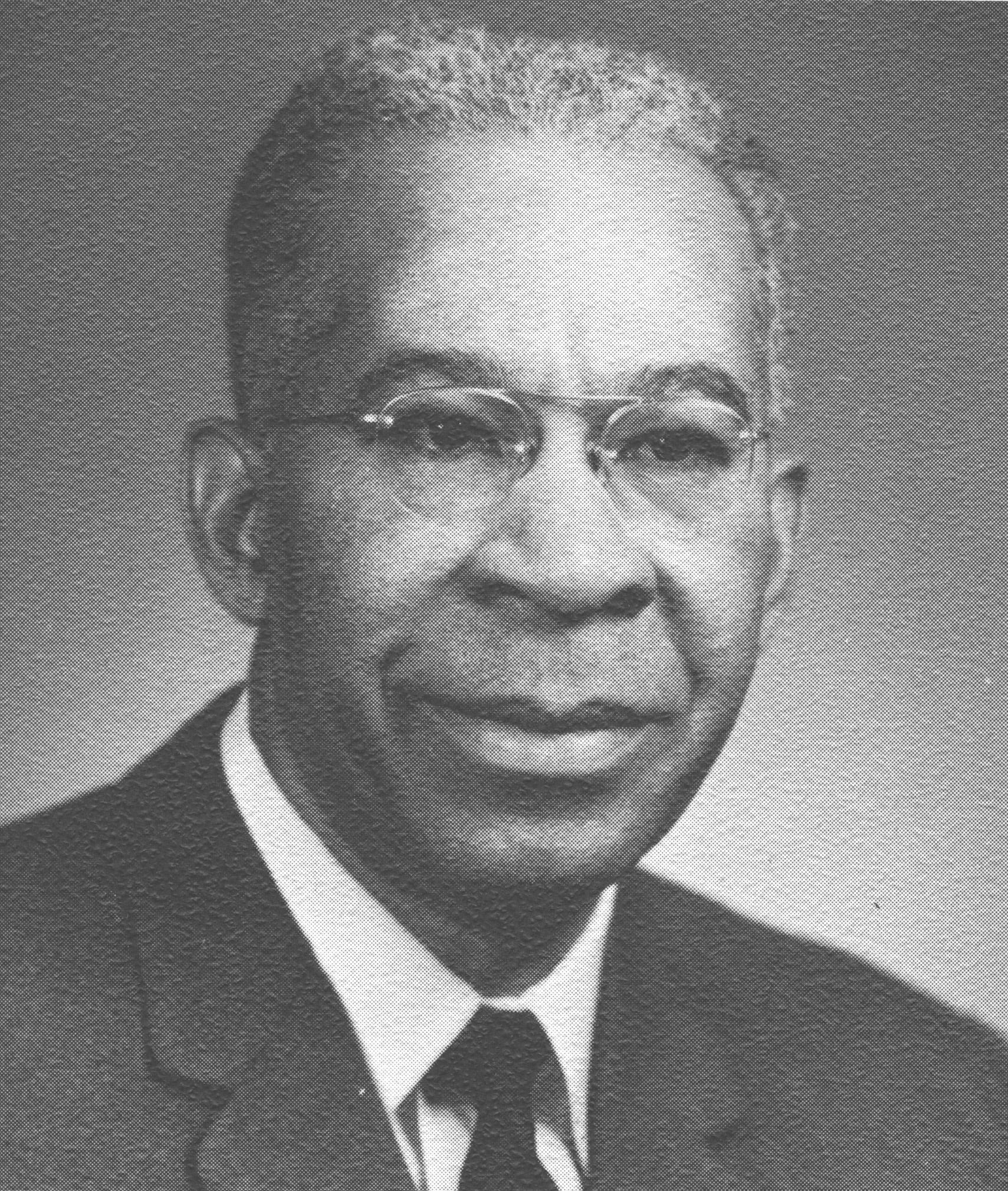
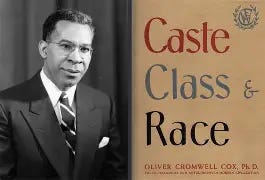
In 1948, the Trinidadian-American sociologist Oliver Cromwell Cox published Caste, Class, and Race, one of the most ambitious and underread works in twentieth-century political economy. His central polemical target was a comparison that had become fashionable among American sociologists: the idea that the position of Black Americans was structurally analogous to the untouchable castes of India. Cox was having none of it. The comparison, he argued, was not merely imprecise - it was ideologically dangerous. To call race a caste system was to make a historical invention look like a natural formation, to strip American racial hierarchy of its capitalist origins and present it as simply another instance of a universal human tendency to rank and exclude.
Cox’s argument was powerful. But it was also incomplete. And the incompleteness matters today in ways he could not have fully anticipated.
The Caribbean Plantation School - Best, Levitt, Beckford, Girvan, and the broader New World Group - developed, largely independently of Cox, what is arguably the most precise analysis of caste as a political-economic instrument anywhere in the social science literature. Their subject was the Caribbean plantation, but their argument applies well beyond it. At roughly the same time, B.R. Ambedkar - Dalit jurist, political economist, and architect of the Indian Constitution - was constructing an analysis of Indian caste that was equally structural, equally attentive to economic function, and equally resistant to the culturalist readings that dominated mainstream sociology. The two bodies of thought have rarely been put in serious dialogue. They should be.
The Plantation School: Caste as Labour Technology
George Beckford’s Persistent Poverty (1972) opens with a deceptively simple claim: Caribbean poverty is not accidental. It is structurally reproduced because the plantation was never just an enterprise - it was a total social and economic institution, engineered from the outset to extract the maximum possible value from coerced labour and export it to metropolitan centres.
What made the plantation distinctive was not merely its brutality but its design. Racial hierarchy was not an unfortunate by-product of the sugar economy; it was a load-bearing structural element. Race was, in Beckford’s analysis, infrastructure - a mechanism for organising labour, distributing resources, and suppressing the possibility of unified resistance. You cannot separate the plantation’s profitability from its racial architecture any more than you can separate a building’s function from the materials it is made of.
The plantation school’s specific contribution to the theory of caste follows directly from this. If race is infrastructure, then the gradations within racial hierarchy - the differential treatment of enslaved people by complexion, occupation, and proximity to the planter household - are not merely social prejudice refined into finer discriminations. They are a management technology. The creation of intermediate strata - the free coloured, the mixed-race driver, the house slave given slightly better rations and the possibility of manumission - served a precise economic function: it manufactured a buffer class with a material stake in the continuation of the system.
Lloyd Best and Kari Levitt’s plantation model makes this architecture explicit. The social pyramid - white planter class at the apex, mixed-race managerial and commercial strata in the middle, Black labouring masses at the base - is not a description of prejudice hardened into custom. It is a functional description of the division of labour. Each stratum has a different relationship to the production process, a different set of material interests, and a different set of loyalties. The intermediate stratum is crucial: its slightly elevated position depends on maintaining the hierarchy beneath it. This produces what the plantation school calls anticipatory obedience - the intermediate group enforces planter norms before being asked, not out of ideological commitment but because its material position demands it.
Caste, then, in the plantation school’s account, is the mechanism by which a single racial hierarchy is subdivided into functional layers. Its purpose is not to express social feeling. Its purpose is to prevent horizontal solidarity among those at the bottom, and to reproduce the extraction of surplus by making hierarchy appear natural and inevitable.
Ambedkar’s Structural Analysis
Ambedkar is usually encountered in Western political economy, where he is encountered at all, as a civil rights figure - the liberator of the untouchables, the author of the Indian Constitution’s anti-discrimination provisions. This is a real but radically insufficient account. Ambedkar was a political economist of the first order, and his analysis of caste, developed over decades from his 1916 Columbia dissertation through to his later works on Buddhism and Indian constitutional design, is one of the most rigorous structural analyses of enforced hierarchy in any literature.
![See related image detail. [100+] Ambedkar 4k Wallpapers | Wallpapers.com](https://substackcdn.com/image/fetch/$s_!wQUQ!,f_auto,q_auto:good,fl_progressive:steep/https%3A%2F%2Fsubstack-post-media.s3.amazonaws.com%2Fpublic%2Fimages%2Fce2bf32f-2c1b-4bb5-b22d-711f1e253d08_188x333.webp "See related image detail. [100+] Ambedkar 4k Wallpapers | Wallpapers.com")
His 1936 speech “Annihilation of Caste” - unpublished at the time because the audience withdrew the invitation when they read what he intended to say - contains his sharpest methodological claim. Mainstream accounts of caste, he argues, treat it as primarily a religious or cultural phenomenon, a Brahminical ideology imposed on a credulous population. This is wrong. Caste is, at its structural core, a division of labourers, not merely a division of labour. The distinction is precise. A division of labour allocates different tasks to different groups - that is characteristic of every complex economy. A division of labourers fixes people to tasks by birth and enforces that fixity through social and legal coercion. The instrument of fixation in the Indian caste system is endogamy: control of marriage within caste boundaries is what makes caste self-reproducing. It is not belief that locks people into position; it is the enforcement of reproductive and social closure.
What Ambedkar shares with the plantation school, though he did not know their work, is the insistence that hierarchy is designed, not natural; that its persistence depends on active institutional maintenance; and that the economic function of the hierarchy is primary, even when the ideological justification is cultural or religious. Brahminical ideology legitimises the caste order precisely as plantation Christianity legitimised racial slavery - not as its cause but as its cover.
What the Comparison Actually Yields
Cox’s warning remains methodologically important. The plantation’s racial hierarchy and the Indian caste system are not the same thing. Cox was right that confusing them risks naturalising what should be historicised. But his clean typology - capitalism produced race in the Americas, pre-capitalist feudalism produced caste in India - was significantly undermined by what British colonialism actually did to the India and Indians.
The British colonial administration encountered a complex, regionally various, and in many respects fluid set of social distinctions - jati, or birth group, overlaid with varying interpretations of varna, the four-fold ritual hierarchy of Brahmin, Kshatriya, Vaishya, and Shudra - and proceeded to rigidify, codify, and bureaucratise it in ways that served colonial administrative and economic purposes. The census operations of the late nineteenth century did not merely describe caste: they created, for the first time, a single enumerable national caste hierarchy, fixed individuals to single caste identities, and made those identities the basis of differential legal treatment, land allocation, and labour recruitment. Caste was modernised by colonialism - made more rigid, more binary, more administratively legible - in ways that should make Cox’s clean distinction between pre-capitalist Indian caste and capitalist Atlantic racial hierarchy considerably less clean.
This is not a reason to collapse the two systems into a single category. The specific mechanisms are genuinely different. The plantation’s intermediate caste was created downward - engineered by the planter class as a labour management technology, producing gradations within a subject population. The Indian caste hierarchy under colonial modernity was captured and hardened - a pre-existing set of distinctions seized and rigidified to serve the purposes of a colonial state. The direction of construction differs even when the extractive outcome is similar.
But the comparison yields something that neither tradition can quite see from inside itself. What both systems share - and what Cox’s typological argument somewhat obscured - is that enforced hierarchy is never simply social. It is always, underneath its cultural and ideological justifications, an answer to an economic problem: how do you maintain a system of extraction when the extractors are numerically small and the extracted are numerically large? You manufacture division. You create differential stakes in the existing order. You produce a stratum whose slightly elevated position makes it a junior enforcer of the hierarchy rather than a potential ally of those below it. The specific mechanisms - colour, birth, ritual purity, ancestry - are, in this structural sense, almost interchangeable. They are solutions to the same problem.
Beckford’s formulation that race is infrastructure and Ambedkar’s formulation that caste is a division of labourers enforced by endogamy are arriving at the same insight from different directions. The insight is this: enforced hierarchy is not a failure of enlightenment values or a residue of pre-modern prejudice. It is a design specification for a particular mode of extraction. You cannot eliminate it by educating people out of their prejudices. You can only eliminate it by dismantling the economic order that requires it.
Why It Matters Now
The plantation school’s lasting warning - issue with Beckford’s formulation, close your eyes and listen - was that emancipation does not end the plantation. The logic of extraction mutates into new institutional forms: landlessness becomes indebtedness, slavery becomes wage labour at plantation wages, the planter becomes the corporation, the racial state becomes the developmental state managing the same hierarchies under a different flag. Post-independence Caribbean political economy, in this account, is not the transcendence of the plantation but its continuation by other means.

Ambedkar’s warning was structurally identical. Legal prohibition of caste discrimination - the constitution he drafted - was a necessary but radically insufficient condition for the annihilation of caste. Without the economic transformation that would remove the material basis for caste hierarchy - land reform, destruction of hereditary occupational monopolies, public provision of education and credit outside caste channels - the legal prohibition would remain formal. Caste would continue to reproduce itself through the economic infrastructure it had built over centuries, even without the explicit ritual and legal apparatus.
Both warnings have been largely vindicated. The Caribbean’s racialised inequality persists not because people still believe in the ideological justifications for slavery but because the wealth chain structures, land distributions, and institutional hierarchies that the plantation created have never been seriously dismantled. India’s caste hierarchy persists not because people still believe in ritual purity but because the occupational, educational, and property structures that caste produced remain the basic architecture of the economy in most of the country.
The question, then, is not whether we have moved past hierarchy. The question is what forms the logic of classify, divide, extract takes when it can no longer operate through the explicit mechanisms of the plantation or the codified ritual hierarchy. That question has answers - in the UK housing system, in algorithmic governance, in the datafication of poverty - but they require the analytical toolkit that the plantation school and Ambedkar, between them, provide.
Cox was right that imprecise analogies obscure more than they reveal. But the comparison, done carefully, does not flatten history. It exposes the common structural logic beneath historically distinct systems - and forces us to ask why that logic keeps finding new institutional homes.
The victory to abolish their enslavement by the Africans on the plantations in Haiti is evidence, in my humble opinion, of the only effective challenge to the plantation model, and the caste system, which you have excellently analysed in this essay! I continue to ask myself what is the psychological element which prevents the ‘poor and the powerless’ - to borrow the description from the Guyanese economic theorist, C.Y. Thomas - from ending their continued oppression? To quote Frederick Douglas, the African revolutionary enslaved in America:
‘Power concedes nothing without a demand, it never did and it never will!’
Hello. I wonder how these two writings, and thank you for these detailed if challenging but distinguishing features you indicate regarding Caste, integrate or are further distinguished by Pt. Satish K. Sharma in his Caste Conversion A Colonial Conspiracy which I am currently reading. He appears to indicate this whole concept and application is false and purely political/
ideological manipulation, a creation of “Dalits” by the British colonials.